Upturned Lips: Meaning, Identification and Makeup Tips
A practical guide to naturally lifted lip corners, reliable photo checks, similar shapes and makeup choices.

Contents
What are upturned lips?
Upturned lips are a natural lip shape in which the outer corners angle gently upward while the mouth is closed and the lower face is relaxed. Imagine a horizontal reference line through the center seam of the lips. If both corners repeatedly sit a little above that line, the outline may be upturned. The slope can be subtle and should not require an active smile.
The defining feature is corner direction, not volume. Upturned lips may be full, thin, wide, narrow, symmetrical or slightly uneven. A pronounced cupid's bow describes the center of the upper lip, while a heavy lower lip describes upper-to-lower volume balance. These traits can occur together, but they answer different shape questions.
Naturally lifted corners can create a brighter resting impression, but lip geometry does not reveal personality, mood or attractiveness. Camera height, head tilt, cheek tension and even a small suppressed smile can exaggerate the effect. A useful assessment describes the stable outline without attaching a beauty ranking to it.
Most people have mixed features rather than a perfect category. One corner may rise more than the other, or the mouth may look neutral in the center and slightly lifted only at the endpoints. In that case, record the strongest visible traits instead of forcing one label.
Key point
Look for a consistent upward direction at both outer corners when the face is genuinely relaxed. Do not classify the shape from lip thickness, a posed smile or one angled selfie.
How to identify upturned lips in five checks
Use a mirror plus two neutral front-facing photos. Avoid smiling, pressing the lips together or raising the cheeks while you check the outline.
- Relax the lower face: Let the jaw rest comfortably and close the lips without squeezing. A held smile can imitate an upturned shape.
- Set a center reference: Use the central line where the upper and lower lips meet, not the nose or chin, as your horizontal reference.
- Compare both corners: Follow the mouth seam from the center outward. A gentle rise on both sides supports an upturned classification; a one-sided rise is better described as asymmetry.
- Separate direction from fullness: Ignore upper-versus-lower volume for this check. Bottom-heavy or top-heavy lips can still have upturned, neutral or downturned corners.
- Repeat under consistent conditions: Take another photo at mouth level in soft daylight. Lens distortion, head tilt and facial tension can change the apparent slope.
For a consistent visual estimate, upload a clear neutral photo to our lip shape detector.
Upturned lips vs downturned, neutral and bottom-heavy lips
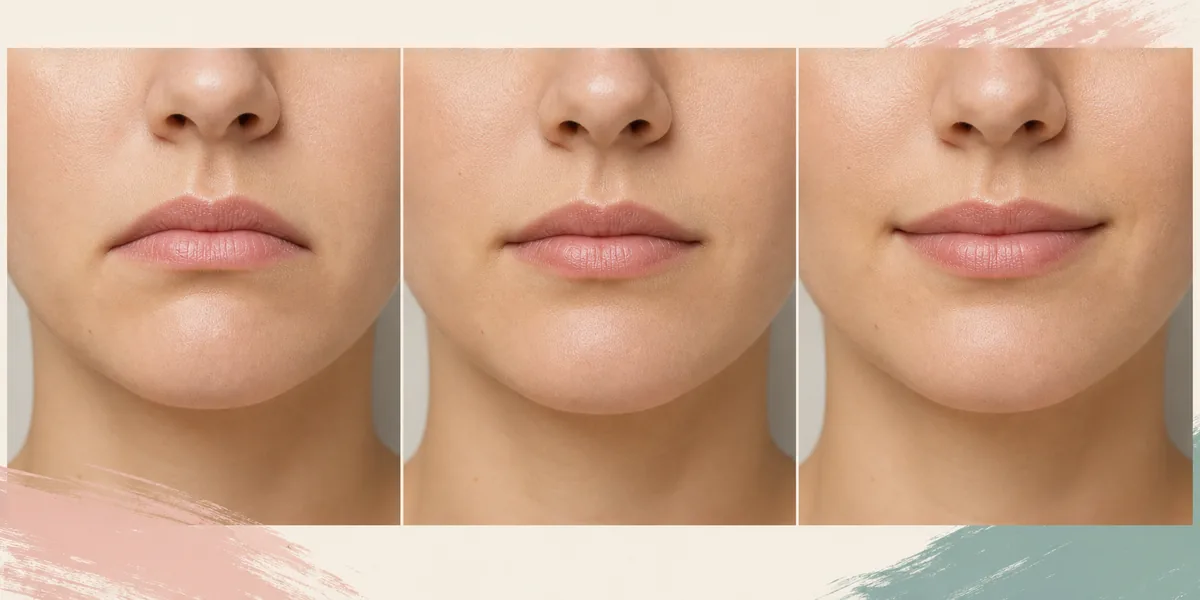
Corner direction and volume balance are easy to mix up. Upturned lips rise toward the endpoints; downturned lips fall; neutral lips remain close to a horizontal line. Bottom-heavy lips describe a fuller lower lip and may have any corner direction.
| Shape | Main signal | Common confusion | Best check |
|---|---|---|---|
| Upturned lips | Both corners sit above the center seam | Direction, not fullness | Relaxed front photo |
| Downturned lips | Both corners sit below the center seam | Opposite corner direction | Compare endpoints with center |
| Neutral lips | Corners stay near the center line | Little consistent rise or fall | Repeat in even light |
| Bottom-heavy lips | Lower lip carries more volume | Volume ratio, not corner direction | Judge fullness separately |
Review the opposite corner pattern in the downturned lips guide and compare the broader categories in the types of lips guide.
Mixed features and what the label cannot tell you
A lip-shape label is most useful as a short description, not a complete portrait. Someone can have upturned lips with a soft cupid's bow, a fuller lower lip, a wide mouth and mild asymmetry at the same time. Record each feature separately when choosing liner placement or comparing photos; otherwise one broad label can hide the detail that actually affects the visual result.
The slope also changes with ordinary movement. Speaking, swallowing, concentrating and holding the phone can recruit muscles around the mouth. Compare only similar resting conditions, and avoid measuring a tiny pixel difference as if it were a fixed anatomical rule. A consistent visual pattern across several images is more meaningful than a single precise angle from one photograph.
This guide cannot determine personality, ancestry, health or the outcome of a cosmetic treatment. It is an editorial identification framework for natural visible proportions. If your goal is makeup, use it to understand the existing contour first; if your goal is a professional procedure, bring neutral reference photos and discuss expectations with an appropriately qualified practitioner rather than treating an online category as a prescription.
Makeup tips for upturned lips
Makeup can preserve the naturally lifted outline, soften it, or emphasize the center. The most balanced result usually follows the real border instead of drawing a much steeper corner.
Keep the corner line light
Trace from the center outward and reduce pressure near the endpoints. A thick dark corner can turn a gentle lift into a sharp, disconnected hook.
Balance the cupid's bow
Define the upper-lip center only as strongly as the corners. If every feature is sharply outlined, the mouth can look visually busy.
Place brightness near the center
A small amount of gloss or a slightly lighter finish at the center emphasizes fullness while leaving the lifted outline readable.
Check the moving mouth
Speak and smile softly before finishing. Liner that looks even at rest may break at the corners when the lips move.
Common mistake
Extending both corners too far upward can create a drawn-on smile. Follow the natural endpoint and make any adjustment short, soft and symmetrical.
Photo checklist for a reliable lip-shape check
A neutral reference photo is more useful than a close selfie. The comparison image shows how a tilted angle can change the visible relationship between the center and corners.
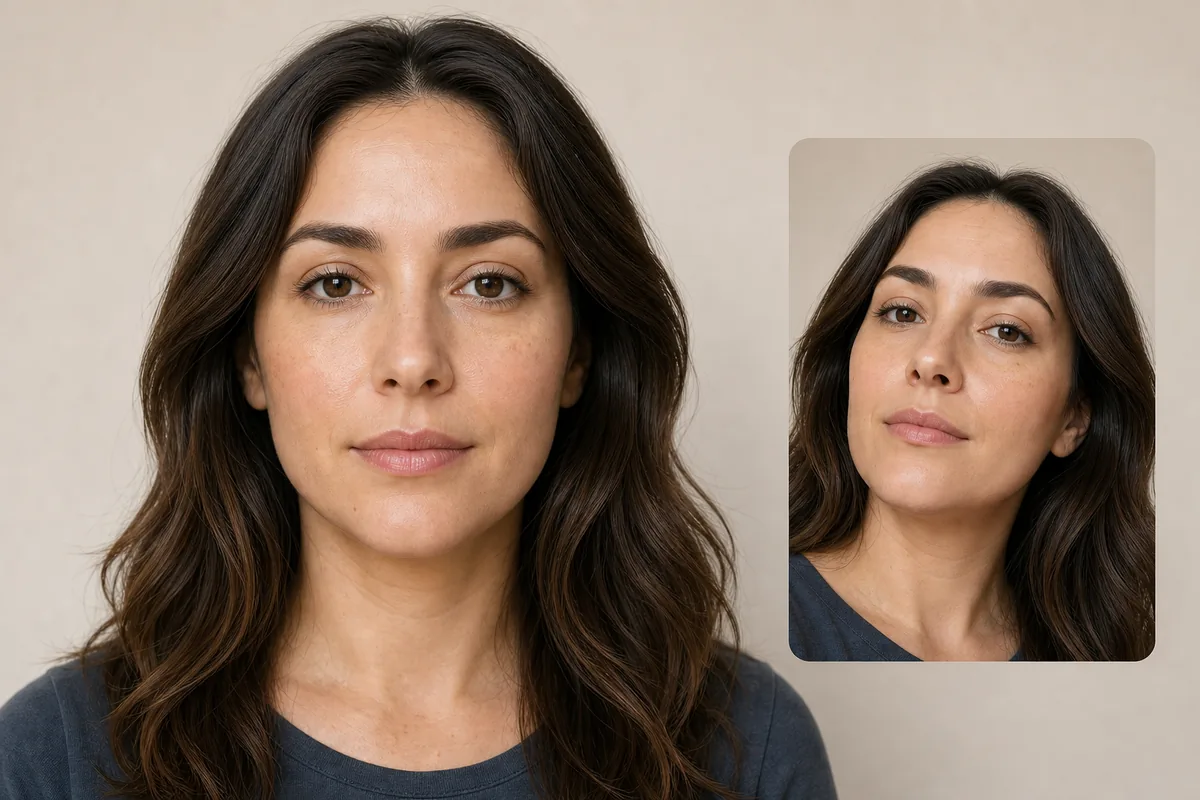
- Even front light: Use soft light from the front so shadows do not hide one corner.
- Camera at mouth level: Keep the lens parallel to the face and far enough away to reduce wide-angle distortion.
- Upright head: Avoid tilting or turning. Both sides of the face should be similarly visible.
- Neutral expression: Relax the cheeks and eyes as well as the lips; a restrained smile still lifts the corners.
- Two-photo confirmation: Repeat on another day before treating a subtle slope as a stable feature.
Frequently asked questions
Related lip shape resources
Updated: July 30, 2026
Try the Lip Shape Detector